One tap, one chain
Tap a charge; every opposite charge in its row and column is dragged in and annihilates until a matching charge stops the line.
One rule. One verb.
Tap a charge. Opposites are pulled across the grid and annihilate.
A 5×7 grid of + and − charges, all face up. Tap one, and every opposite in its row and column is dragged in and annihilates — until a matching charge stops the line. Nothing hidden.
Read the board, take the tap
Clear eight or more and the tap is free. Clear the whole cross — a full row and column at once — and it pays you back. The skill is seeing the tap that clears the most.
Gameplay overview
Tap a charge; every opposite charge in its row and column is dragged in and annihilates until a matching charge stops the line.
Clear eight or more and the tap is free. Clear the whole cross — a full row and column — and it refunds you, then some.
Every run is twelve taps. Bank enough score and you earn more, pushing a good run further than it should go.
Chain big clears and a rising multiplier turns a good run into a great one. One mistimed tap and the streak craters.
No accounts, no tutorial wall, no hidden tiles. It loads straight into the grid and plays fully offline.
Named goals — clear a whole row, land a full cross — and a fresh daily at midnight. Beating them pays shards and unlocks themes: cosmetic colors, never gameplay.
How it works
A five-by-seven field of red and blue charges, all face up. Find the tap that clears the most.
Every opposite charge in that charge's row and column is pulled toward it in one synchronized slam.
Opposites collide and clear, running down each line until the first matching charge blocks it.
Clear eight or more for a free tap; clear the whole cross for a refund and then some. Chain clears to run hot.
Survivors fall, new charges drop in. Twelve taps to score as high as you can, with a challenge to chase on every run.
Gameplay screenshots
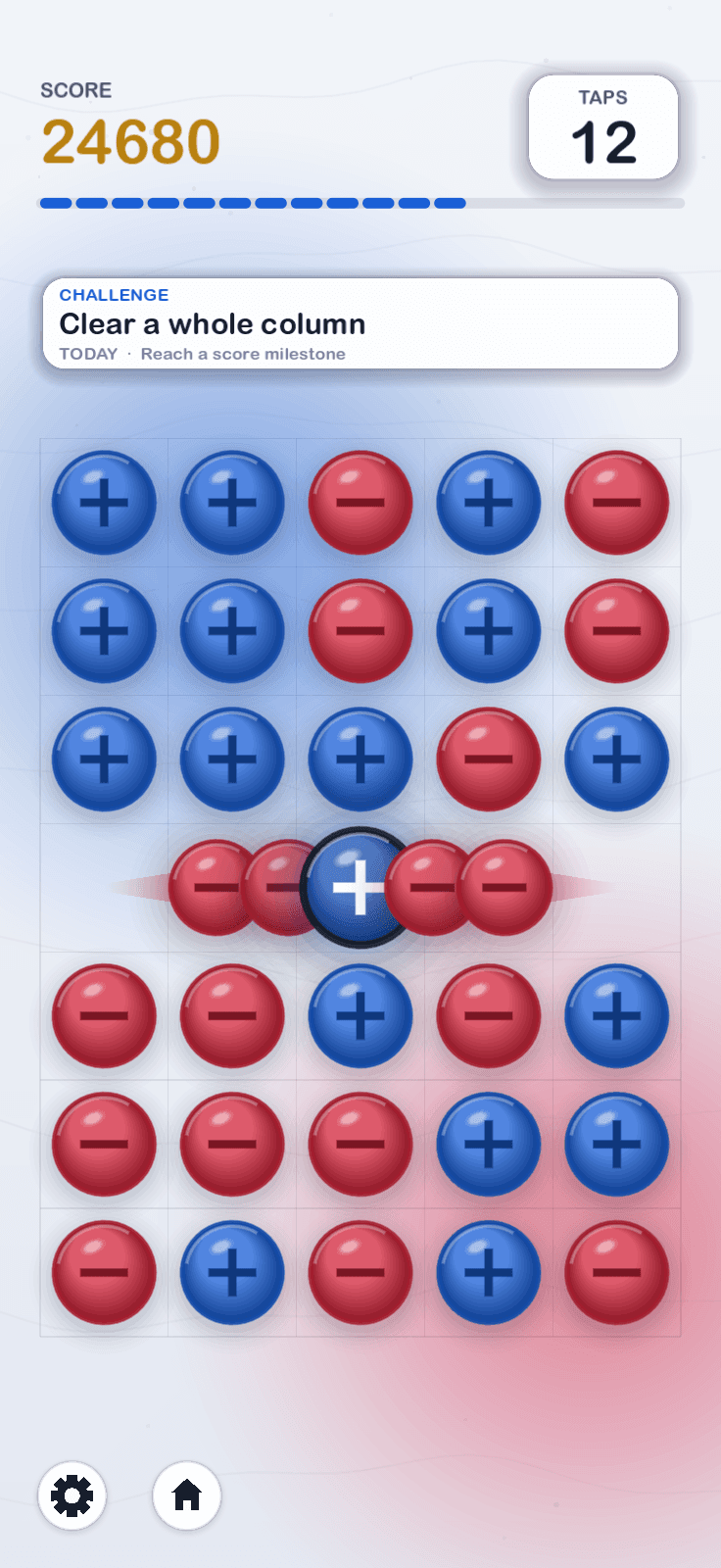
Tap a charge — every opposite in its row and column is pulled in.
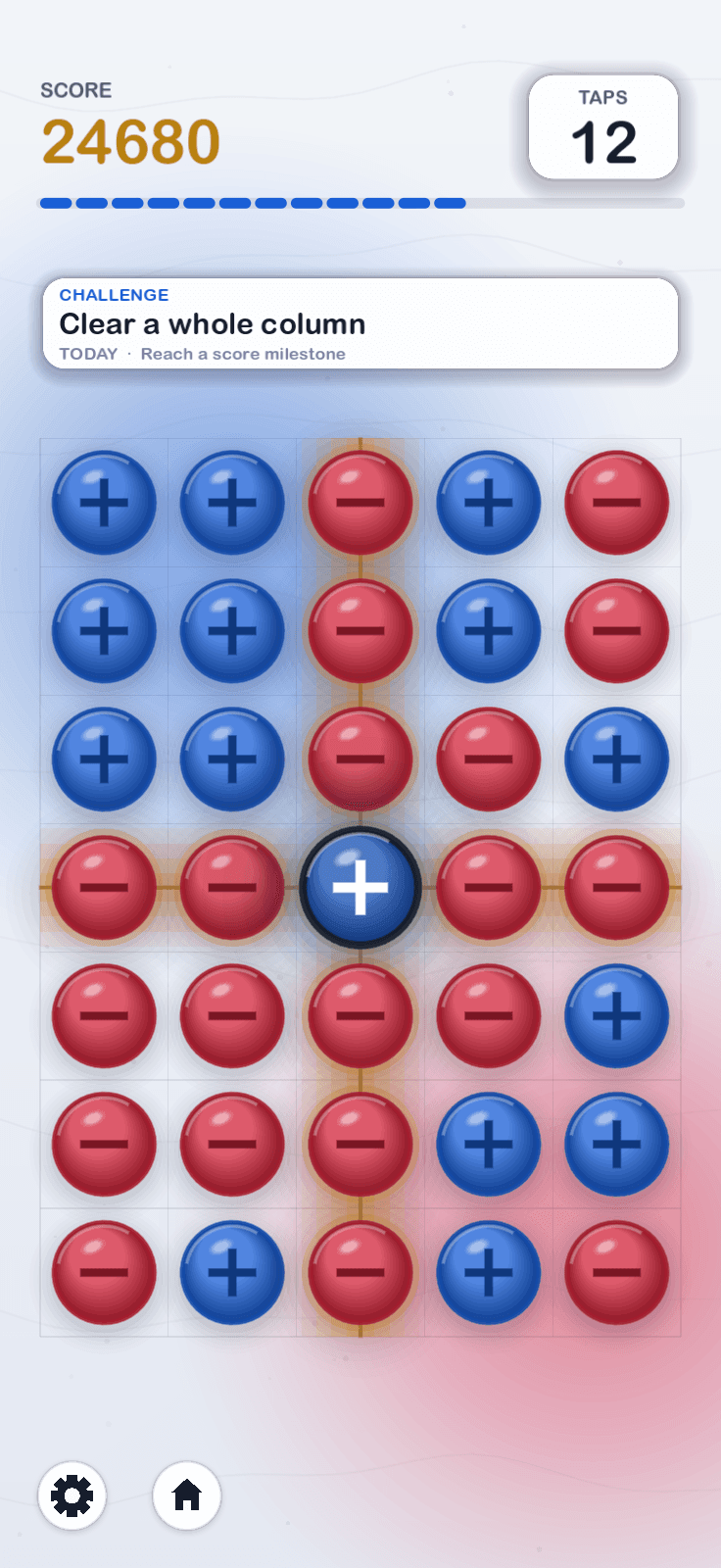
Clear the whole cross and the tap pays you back.
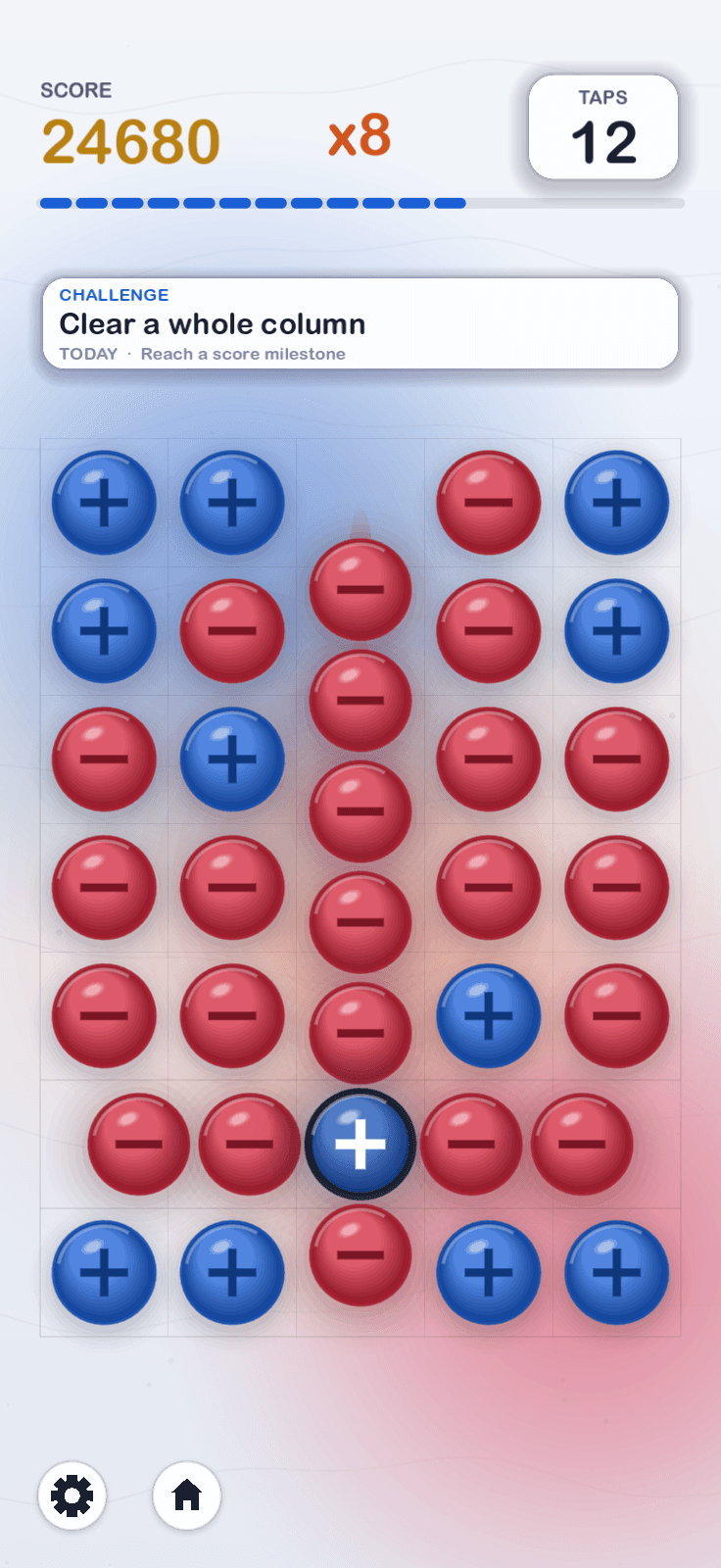
Chain big clears and the grid runs hot.
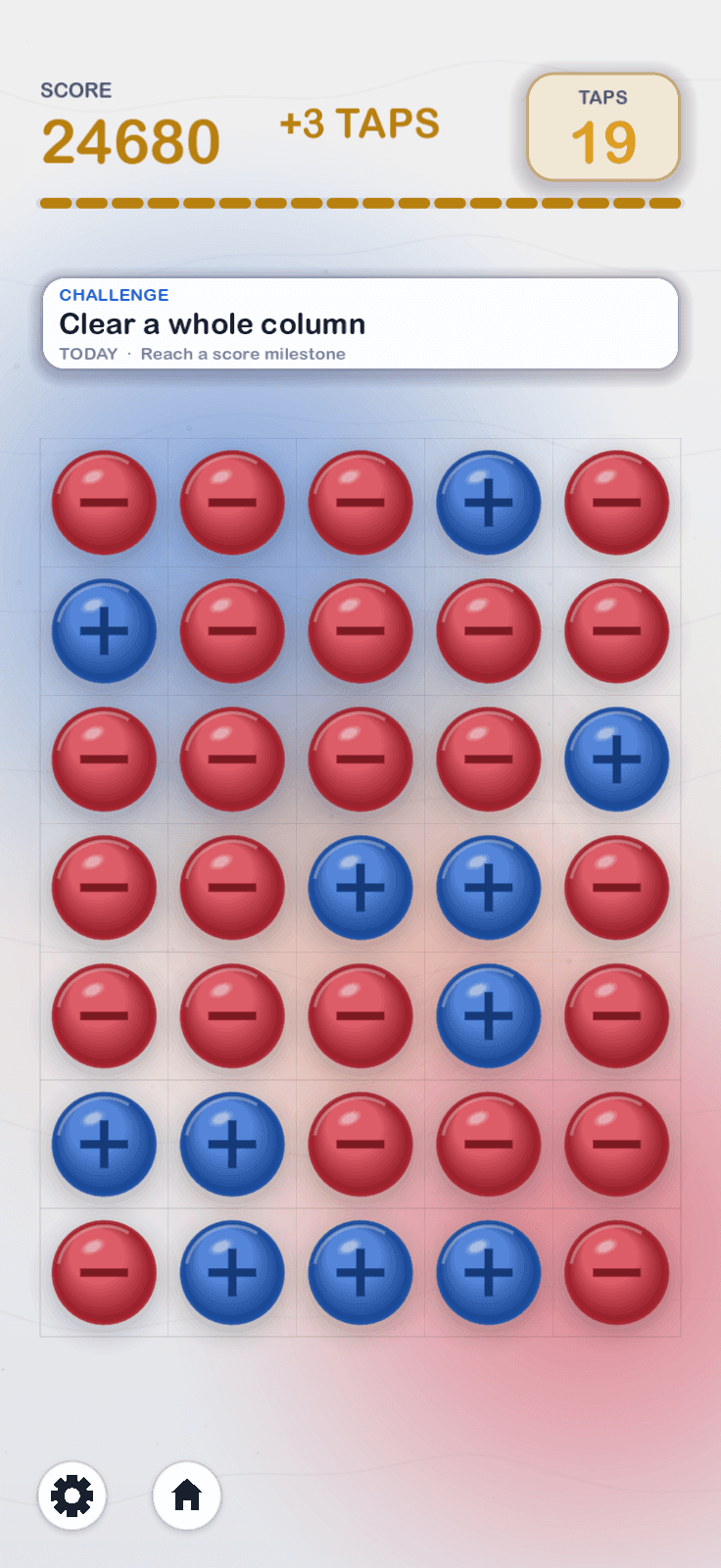
Bank enough score to earn more taps and push the run further.
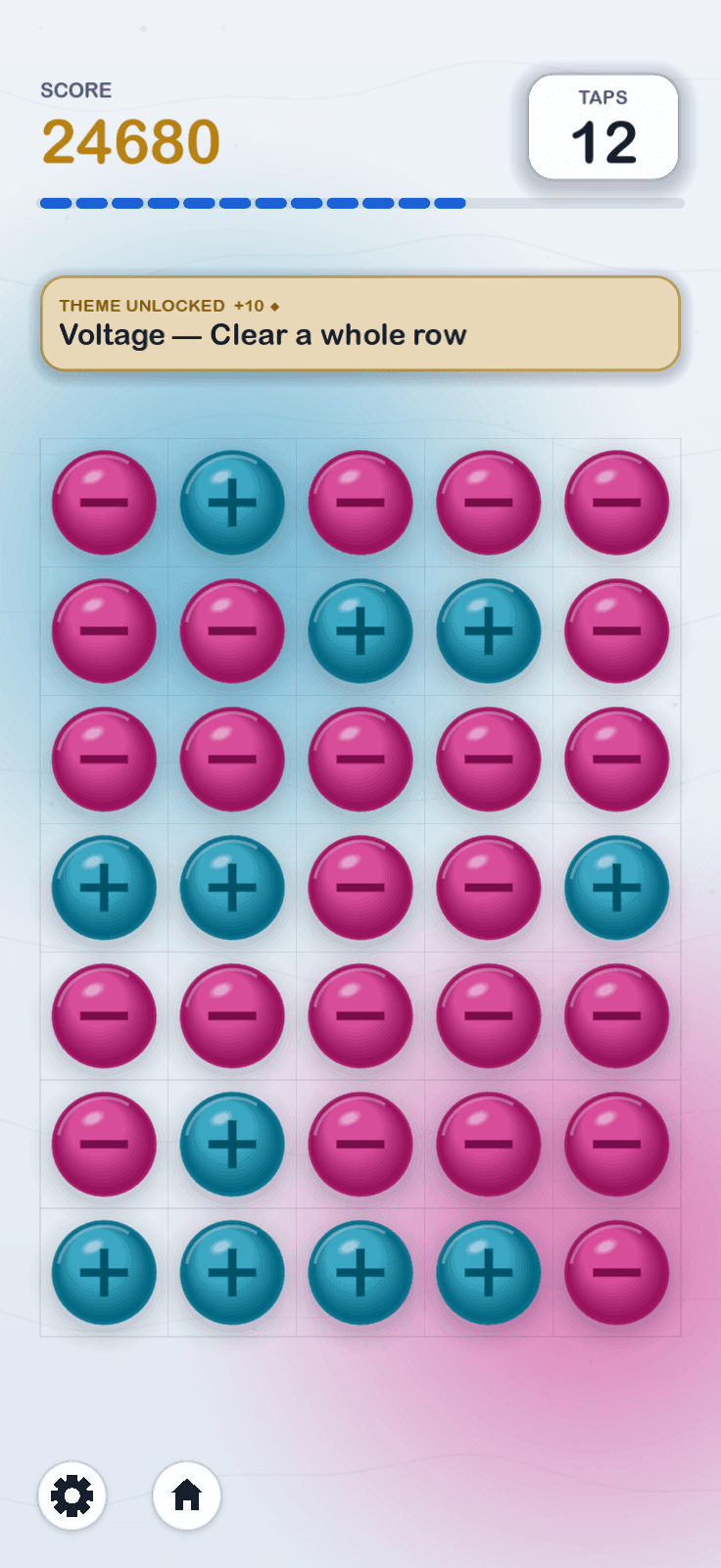
Beat challenges to unlock themes — a new one every day.
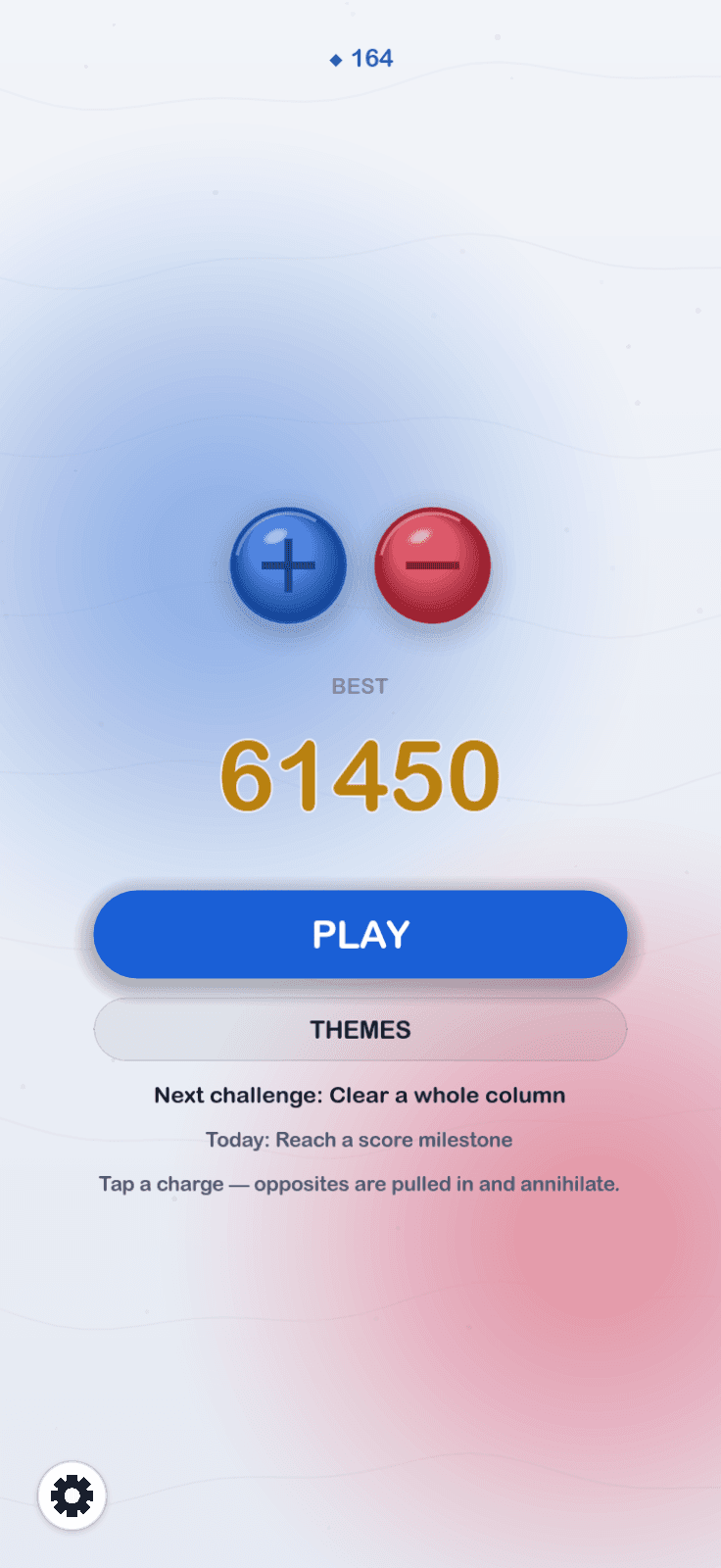
Twelve taps — how high can you score?
Tap a charge — every opposite in its row and column is pulled in.
Clear the whole cross and the tap pays you back.
Chain big clears and the grid runs hot.
Bank enough score to earn more taps and push the run further.
Beat challenges to unlock themes — a new one every day.
Twelve taps — how high can you score?
Frequently asked questions
A one-tap arcade puzzle. Tap a charge and every opposite in its row and column is pulled in and annihilates until a matching charge blocks the line. You saw it work the first time you watched it.
No. Nothing is hidden — the whole board is face up and the best move is always on it. The skill is seeing the tap that clears the most.
Spotting the highest-value tap, and chaining big clears into a streak so the multiplier turns a good run into a great one.
No timer. Every run is twelve taps. Clear well and you bank more taps, so a strong run keeps going.
Yes. A daily challenge turns over at midnight, and a ladder of named challenges gives every run a goal. Beating them pays shards and unlocks new themes.
Yes — a run is about half a minute. Quick to start, easy to re-tap, and it respects your time.
One rule, one verb
Read the grid, take the tap that clears the most, and watch the whole cross pay you back — then come back tomorrow for a new challenge.